Most wildlife photographers, including myself, prefer the softer light of early morning or late afternoon. Animals, however, do not arrange their activity around golden hour. In many places due to either animal behavior, access, or regulations the best spotting times are when the sun is high and the light has hardened.
Too much of a good thing
Wildlife photographers usually love light, and often find ourselves wanting more of it. Shooting fast moving targets at dusk is hard enough without needing to increase ISO into the stratosphere. But there is another side to this coin. Harsh, strong light is difficult. It produces deep, hard-edged shadows, reduces colour saturation, and can blow highlights.
Compensating in the edit, or waiting for better conditions isn’t aways enough. Neither approach is especially productive over the long term. What has proved more useful to me is to stop treating harsh midday light as an inferior medium, and start working with its actual characteristics.
A different approach to lighting
When the sun is high in the sky, the quality of light is rarely beautiful. It is harsh, direct, and lacks the natural softness we prefer. You cannot change the height of the sun, but you can change where you stand relative to it. Because animals are three-dimensional and the midday sun rarely falls at a perfectly vertical 90-degree angle, your position relative to the subject completely alters how that harsh light is recorded.
Instead of shooting with the sun at your back, which flattens the scene and washes out detail, you can orient yourself to the subject to create contrast and dimension:
Creating Side-Lighting: By moving 90 degrees to the side of the animal, you force the steep down-light to strike only one side of their body relative to your lens. The resulting shadows under the brow, jaw, and flank reveal the natural texture of fur, feathers, and skin.
Creating Rim Light: By positioning yourself so the high sun sits behind the subject, the overhead rays catch their top edges, creating a bright rim that cleanly separates the animal from the background while keeping their face in softer shadow.
A small change in your physical position often improves a midday photo more than any adjustment to exposure or focal length.
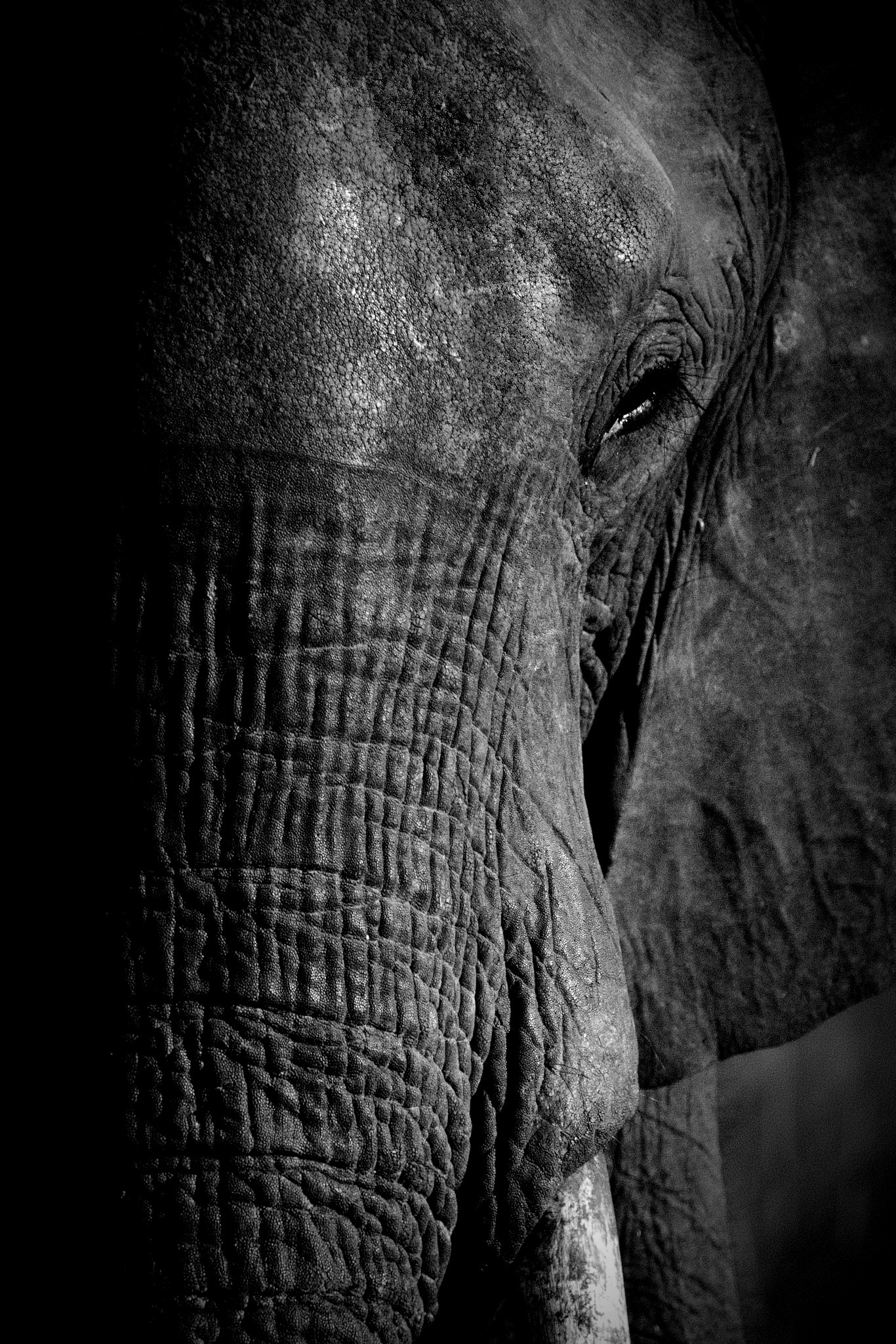
A bull elephant up close, taken in Etosha, Namibia.
Managing exposure
Harsh light exposes weaknesses in composition more ruthlessly than soft light does. My default approach to exposure in these conditions is conservative. I protect the brighter parts of the subject even if the shadows go darker than ideal. Current sensors and careful processing can recover a useful amount of shadow detail. Completely blown highlights cannot be recovered. In practice this usually means a modest negative exposure compensation or careful metering on the lit portions of the animal. I adjust when the subject is mostly in open shade or when the brightest areas are small and unimportant, but as a starting point I prefer a slightly dark file to one with irreversible damage in the bright areas.
Playing with background composition
Hard overhead light also makes background selection critical. Bright patches or sunlit clutter become blinding distractions that pull attention away from your subject. Look for shaded ground, dark foliage, or lower angles that place a muted backdrop behind the animal to keep your lighting in check.
Alternatively if you have a clean background you can get creative with depth and place your subject underexposed in shadow keeping bright highlights in the back, framing your subject and setting the tone. This kind of selectivity is uncomfortable at first. It feels like missed opportunities. Over time it becomes clear that most of those “missed” frames would not have been strong anyway, and in return you get new ones you didn’t expect youd like as much as you do.

A sparrow resting on a farm fance, cast in a tree’s shadow as the meadow behind it is lit by the bright spring midday sun. Taken at Boerderij Het Geertje in Zoetermeer.
Capturing moments that matter
Sometimes a moment is compelling enough that the light becomes secondary. A strong piece of behaviour, a rare interaction, or a particularly revealing expression will often carry a photograph despite imperfect lighting. The reverse is seldom true. Learning to distinguish between these situations is part of developing judgement. It requires honesty about what is actually in front of you rather than what you hoped to find. The goal is not to make harsh light look like something it is not. It is to make images that remain honest and considered even when the conditions are unsympathetic.