Is the Sony a6700 the best value wildlife camera body?
After several years moving between full-frame bodies and lighter Sony kits, the a6700 has become the camera that most often lands in my bag when mobility matters more than absolute low-light performance or maximum resolution. It’s not a flagship and it doesn’t pretend to be one. What it does offer is a practical middle ground: the generation of AI subject detection found in much more expensive Sony bodies, solid dynamic range, and a compact, travel-friendly body that weighs just 493 g with battery and card.
I recommend it most to people who want strong capability and struggle to find a budget camera that meets their wildlife photography needs, without flagship cost. I’ve used the a6700 both as a secondary body alongside the A7R V and as my primary camera paired with the 70–350mm. That latter combo, in particular, changed how often I reach for my camera, it transforms the a6700 into a lightweight, go-anywhere wildlife tool rather than a backup.
This review is a reflection of my hands-on experience with the body, not a deep-dive technical spec breakdown, for which there are much better resources out there than yours truly. My focus here is on how it performs for wildlife shooting first: how it handles in the field, how reliable the subject detection is, and how the body’s size and ergonomics affect real-world use.
Key Takeaways
26.1MP BSI APS-C sensor, ISO 100–32,000 native (50–102,400 extended)
Dedicated AI processing unit with subject recognition (Human, Animal/Bird, Animal, Bird, Insect, Car/Train, Airplane)
759 phase-detection points covering approximately 93–95% of the frame
11 fps continuous shooting (mechanical or electronic)
5-axis IBIS rated at 5 stops
Single UHS-II SD card slot
NP-FZ100 battery (CIPA approx. 550 EVF / 570 LCD)
493 g with battery and card
Build, handling and ergonomics
The chassis is magnesium alloy with dust- and moisture-resistant sealing. It is good, but not at the level of OM System bodies or Sony’s own flagship full-frame cameras. I have used it in humid conditions and light rain without issue. At 122 × 69 × 64 mm and 493 g ready to shoot, it is genuinely light and easy to carry for long days.
The EVF is one of the weaker points. It is serviceable, but you remain aware that you are looking at a screen. Resolution, brightness and dynamic range lag behind recent flagships. Until Sony updates the series, this is the feature that feels most dated.
Menus and operation
Sony’s menu system is familiar and generally clear. The lack of a joystick will bother some users; I found the control wheel and touch operation adequate, though not ideal. Subject recognition still requires manual selection of the subject type. An automatic mode would be a welcome improvement.
Battery life and memory cards
The a6700 uses the NP-FZ100 battery. With moderate use and occasional bursts I typically see well over a thousand frames from a charge; a second battery remains good practice for long days. A fast UHS-II card is strongly recommended if you shoot at 11 fps. V60 covers most stills and video needs; V90 is required for the highest-bitrate All-Intra recording and some slow-motion modes.
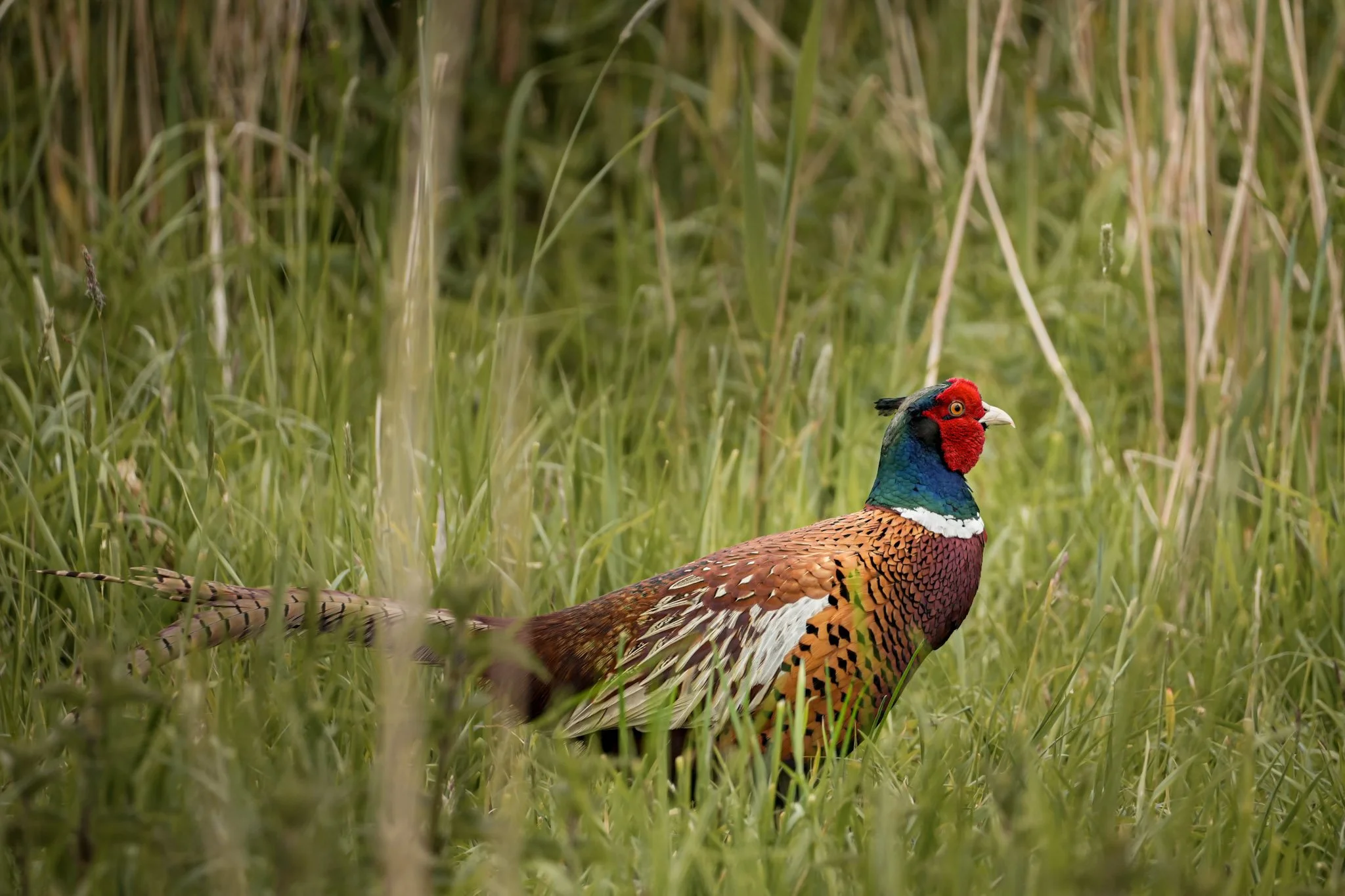
For relatively slow moving subjects like this pheasant the electronic shutter is just fine. But if it starts flapping it’s wings mechanical is the way to go. Shot on the Sony Alpha a6700 and 70-350mm.
Shutter, burst and rolling shutter
Mechanical shutter reaches 1/4000 s, electronic 1/8000 s. Continuous shooting is 11 fps with full AF/AE tracking. The buffer holds roughly 59 compressed raw frames.
Rolling shutter is the main practical limitation of the electronic shutter. Readout is approximately 25 ms with compressed raw/JPEG and around 64 ms with lossless compressed raw. Fast panning or erratically moving subjects (birds in flight, small mammals) can show distortion, especially with lossless raw. For most wildlife work I default to the mechanical shutter. Video rolling shutter is considerably better: roughly 15.9 ms in 4K 24–60p and 8 ms in 4K 120p.
Video
I do not shoot enough video to offer a detailed assessment, but the footage I have recorded has shown good detail, solid dynamic range and the same fast subject-detection autofocus available for stills.
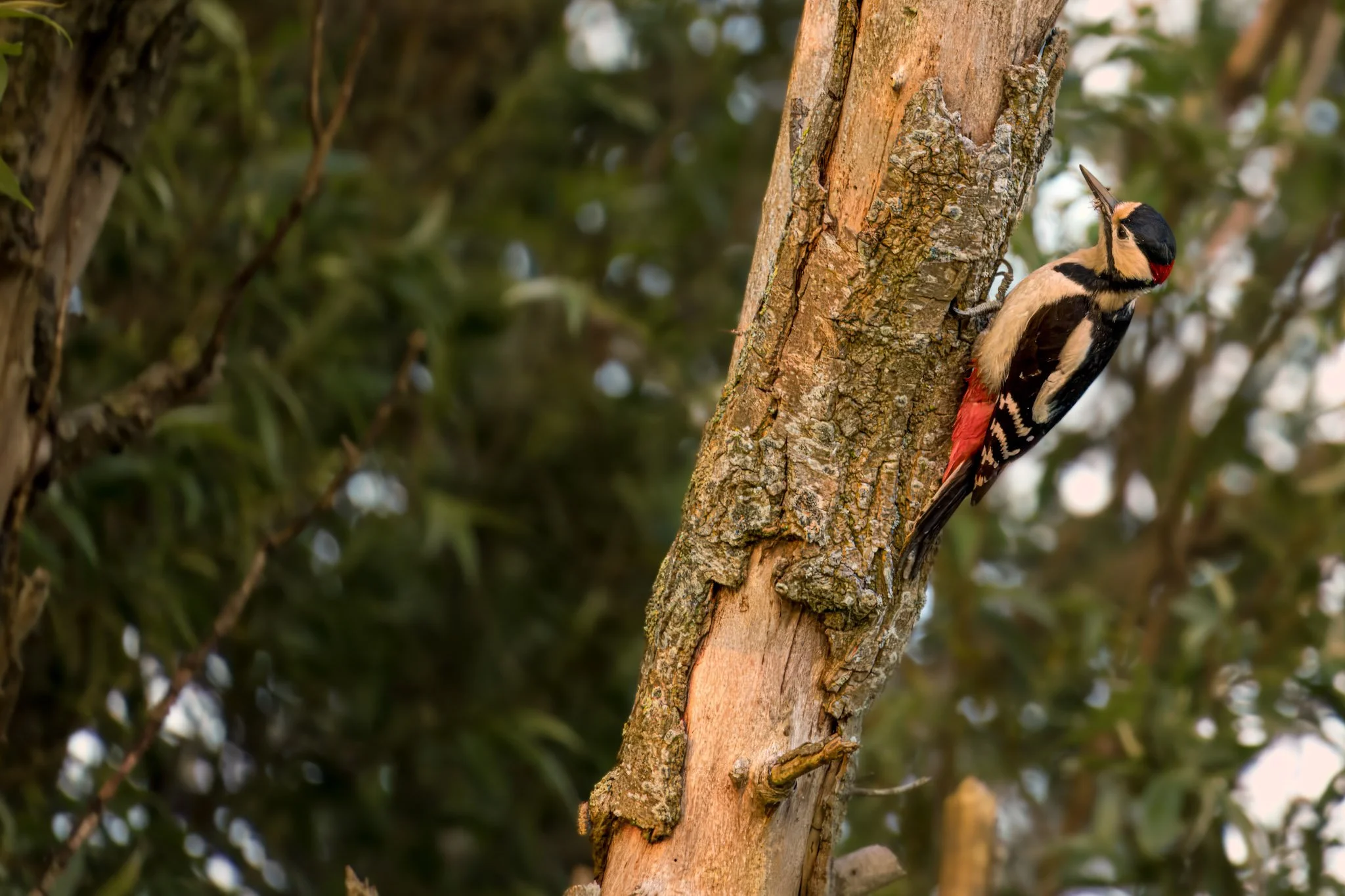
Above around ISO 5000 even with noise recovery, fine detail loss starts to become an issue.
Image quality and high ISO
The 26.1MP BSI sensor delivers clean files and good dynamic range for APS-C. In practice I find detail and colour hold well up to ISO 3200–6400 for most wildlife subjects. Higher ISOs remain usable when shutter speed is the priority, though I generally try to stay at or below ISO 5000 when I need to retain fine edge detail after noise reduction.

The AI autofocus is one of the strongest features of the a6700, with even small subjects tracked in busy and difficult environments.
Wildlife-specific performance
The AI subject detection (same generation as the A7R V) is the camera’s strongest feature. Real-world hit rates on birds are high, including through moderate clutter, and once locked the tracking is sticky. In very low light or with extremely small/erratic subjects it can still hunt. Stabilisation is effective, and the 1.5× crop gives useful extra reach with full-frame telephotos such as the 200-600mm.
Why the a6700 remains the best value wildlife body
After two years of regular use, the combination of flagship-level subject detection, usable image quality, and a body light enough for long days is still difficult to match at this price. There are cheaper cameras and there are far more capable ones. Few deliver this much usable performance in such a small, relatively affordable package.
The Canon EOS R7 and Fujifilm X-T5 both have their strengths—higher resolution, faster bursts, or dual card slots. Neither currently matches Sony’s subject-detection system at this level. For wildlife, and especially for birds, that difference in autofocus is significant.
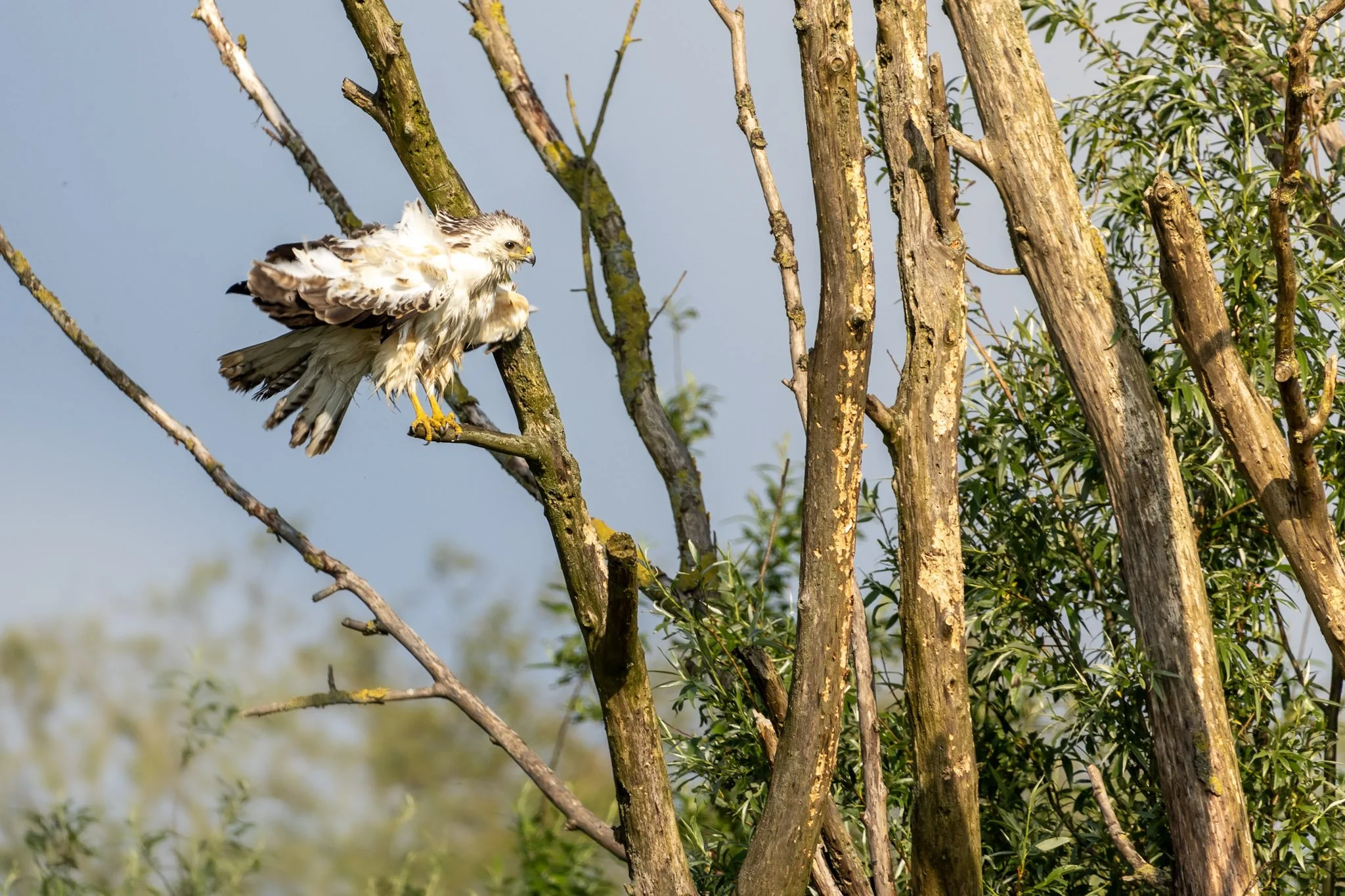
Paired with the 70-350mm G OSS, the a6700 becomes the ultimate hiker’s camera for birding. With incredible reach at an equivalent 525mm all in at just over 1.1kg.
Who this camera is for
Ideal for enthusiasts and working photographers who prioritise mobility, strong autofocus and reach on a realistic budget. Less suitable if you need dual card slots, fully sealed weather protection, higher resolution for heavy cropping, or the complete absence of rolling shutter.
Bottom line
The a6700 remains one of the most sensible APS-C wildlife cameras available. It delivers a large share of flagship autofocus performance in a light, affordable body. For most serious enthusiasts, and for many professionals as a primary or secondary camera, it continues to make a great deal of sense.
If you want to take full advantage of the a6700’s size and weight, pair it with a lens that matches its character. The 70-350mm G OSS is the most natural partner I have found. You can read my full review of that lens here.