The best travel and wildlife lens value for Sony APS-C shooters?
A 525 mm-equivalent reach, sharp Sony G lens that weighs only 625 grams and makes it very easy to take your camera along for the day. That is the simplest way to describe the role the Sony 70–350mm G OSS has taken in my kit. While I’ve since moved from APS-C to full frame, now the Sony a7R VI, I still keep it in my kit bag and reach for it often. It can’t match my full-frame glass for image quality, but it is the single best backup zoom I own and is therefore a staple on any hike, city trip, or wildlife outing when I need to pack light. Used on the a6700 it becomes a particularly coherent package, but on high-resolution full-frame bodies it can serve a very specific niche also.
While the camera was released quite a while ago, (2019) I’d rate this as a cornerstone lens of the Sony ecosystem due to it’s unique combination of features, and so I think it’s valuable to review it nonetheless. This review looks at the optical and handling realities of the lens itself, then at the specific value it offers for travel and wildlife work on APS-C and even full-frame. As always these are my two cents, for more in depth technical analysis I can recommend Camera Labs.
Key Takeaways
70–350 mm (105–525 mm equivalent on APS-C)
Weight 625 g; dimensions 77 × 142 mm
f/4.5–6.3 aperture
XD Linear Motor (fast, silent)
Optical SteadyShot (~3–4 stops real-world)
Minimum focus 1.1–1.5 m (0.23× magnification)
Dust- and moisture-resistant
Very good sharpness for size/price; mild drop at 350 mm
Outstanding reach-to-weight ratio
Build, Handling and Size
For the amount of zoom you get out of it, the 70–350G is compact, though it extends out to 190 mm when zoomed in to it’s maximum range of 350 mm. It handles well, with its 625 g weight light enough to be an all-day hiking lens and not feel overly top-heavy, even on the small Sony a6700. The body has reasonable build quality and good weather sealing with a bit more plastic than you’d find on Sony’s G‑Master lens line. It has a roughened finish that holds up well to scratching and marks, so for most this lens will feel plenty sturdy for the outdoors.
You get three buttons: one for stabilization ON/OFF, one to switch from manual focus to autofocus, and a third for focus hold, which can come in handy, I’m glad Sony included it here. The manual focus ring has a good, solid finish with deep grooves that grip well. Turning it is smooth, though not spectacular; it gets the job done. The zoom ring, while decent, does leave room for improvement as it could be slightly smoother.

Despite an effective focal length of 525 mm, the small lens opening won’t compete with full-frame zoom lenses when it comes to subject separation, even when framing is ideal and the aperture is fully open.
Optical Performance and bokeh
There is a lot going on in this little lens. Sony’s G line are usually good mid-range lenses with great value and performance, but not at the level you find with its G Master line. I’ve found there’s a lot of grey area between these two lines, like the Sony FE 200–600mm G OSS, for example. This zoom is another of those.
It has 19 elements in 13 groups, which seems to have produced excellent center sharpness at 70–250 mm even wide open, and still very good sharpness at 350 mm, though with a barely perceptible drop. Sharpness across the frame is good, with strong contrast and fine detail-resolving power. Stopping down, as with most zoom lenses, does give a small contrast and sharpness boost, but not enough to make a difference in effective image quality.
Bokeh is a different story. Because you’re shooting with an APS-C lens at f/4.5–6.3 you end up with a lens opening roughly equivalent to f/5.5 on full frame; this simply is not able to give you strong background separation despite the impressive reach. It is more comparable to shooting f/8 or f/9 on full frame for subject separation, though this is purely for separation, for exposure this is of course f/4.5–6.3. When you can separate your subject the bokeh is good for a variable zoom lens. For better bokeh and subject separation you’d need a much larger aperture and, for the very best results, a prime.
As far as image quality goes, the 70–350 G punches above its price class and weight in optical performance, at a full-frame equivalent of 105–525 mm. Quite an impressive achievement for something you can fit in your handbag.
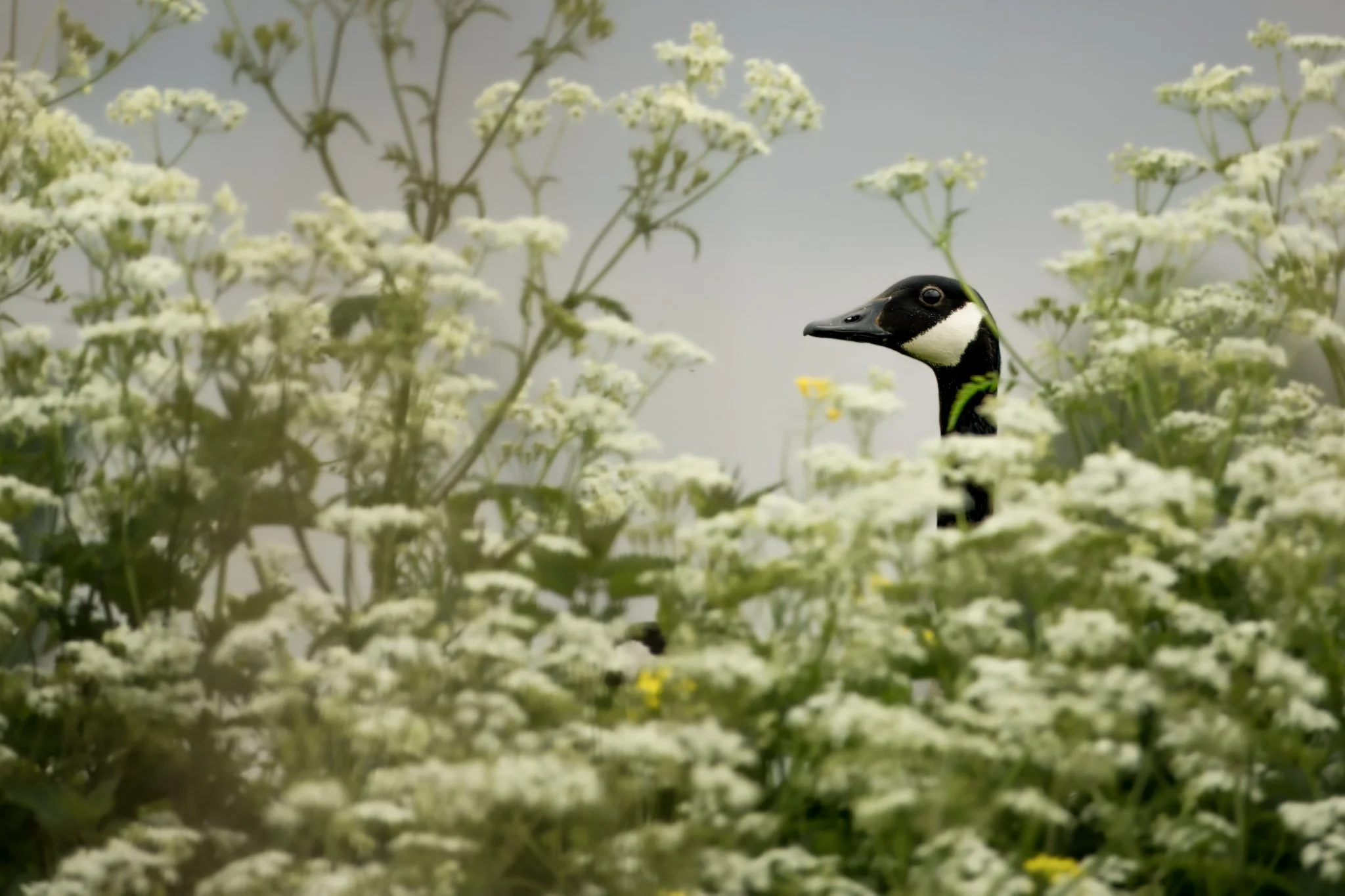
Tricky environments are a walk in the park with this lens, especially when paired with newer bodies with AI subject detection.
Autofocus Speed and Accuracy
This was one of Sony’s first APS-C lenses with its XD (Extreme Dynamic) Linear Motor. It’s fast, precise, and nearly silent. Paired with the Sony a6700 AI subject detection and tracking, this is a very sticky autofocus indeed.
To be perfectly honest, I have no notes here on the focus speed or accuracy, as autofocus was flawless and never too slow except in low light, where the lens and camera do start having to hunt given the relatively slow f/6.3 when zoomed out to 350mm. Those are physical limits I can’t fault the XD motor for, however — it can’t fight physics. Stability is also excellent and worked together with my a6700 IBIS.
This is a seriously fast piece of kit for wildlife tracking, stable and intelligent, and the AI tracking autofocus in the Sony a6700 seems made for it. Shooting with it on the A7R V and A7R III (in APS-C/crop mode) was surprisingly smooth too; in crop mode both of these cameras resemble the a6700 closely. If tracking fast-moving birds is important to you, consider this a must-have for your full-frame or APS-C lens lineup.
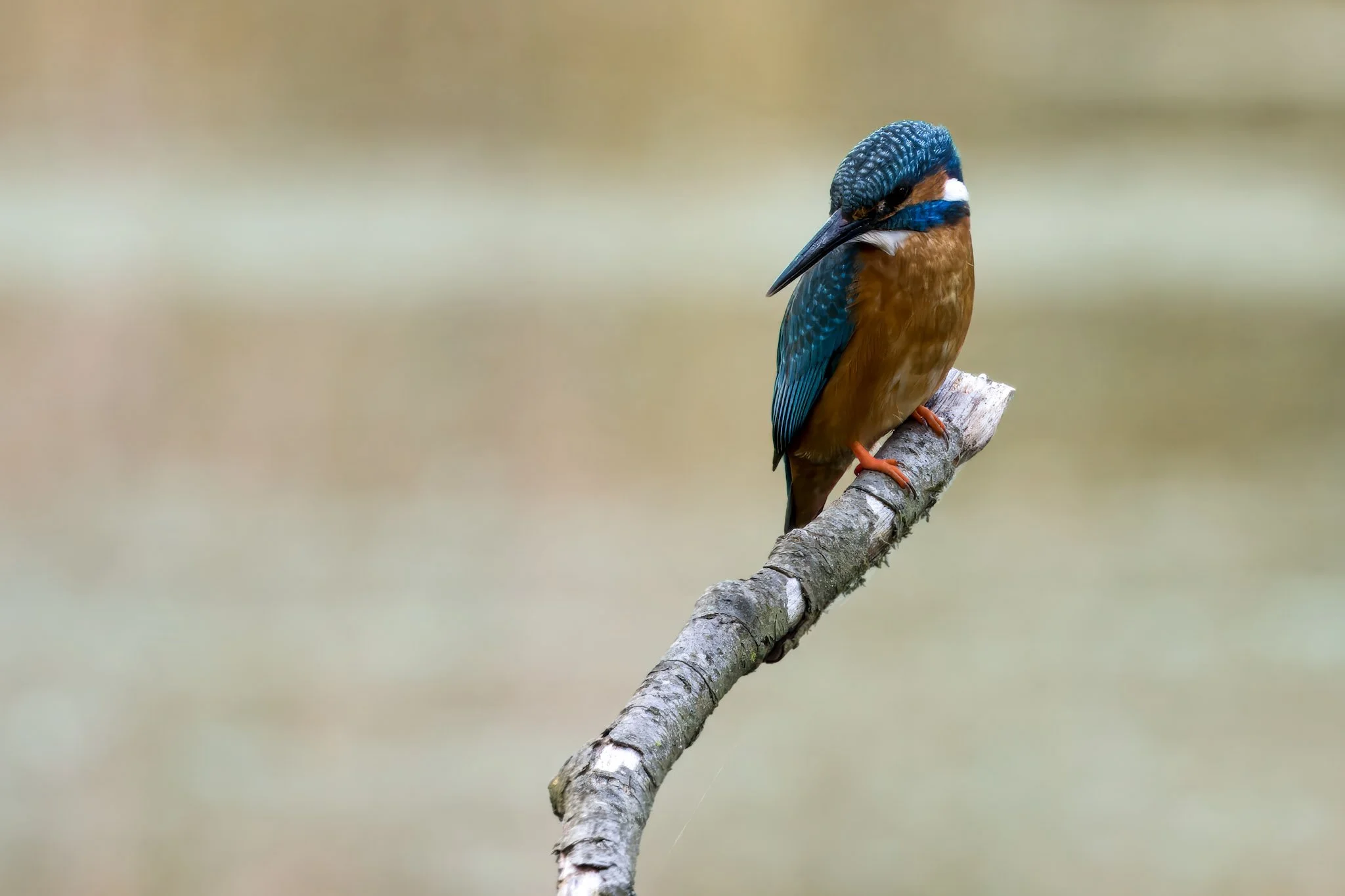
Being so portable, you can easily take it with you on a hike, and having a camera with you all the time generally gets you more opportunities to shoot wildlife.
The Best Travel and Wildlife Lens Value for APS-C Shooters (Sony)
Few lenses deliver a true 525 mm-equivalent field of view at this weight, and that practical advantage combined with it’s performance is why the 70–350mm stays in my bag. It performs reliably with cameras’ AI subject-detection systems, and its build quality and sharpness wide open are impressive. At roughly €700 new, or under €600 used, you’d be hard‑pressed to find a zoom that offers better value for wildlife work in Sony’s lens ecosystem.
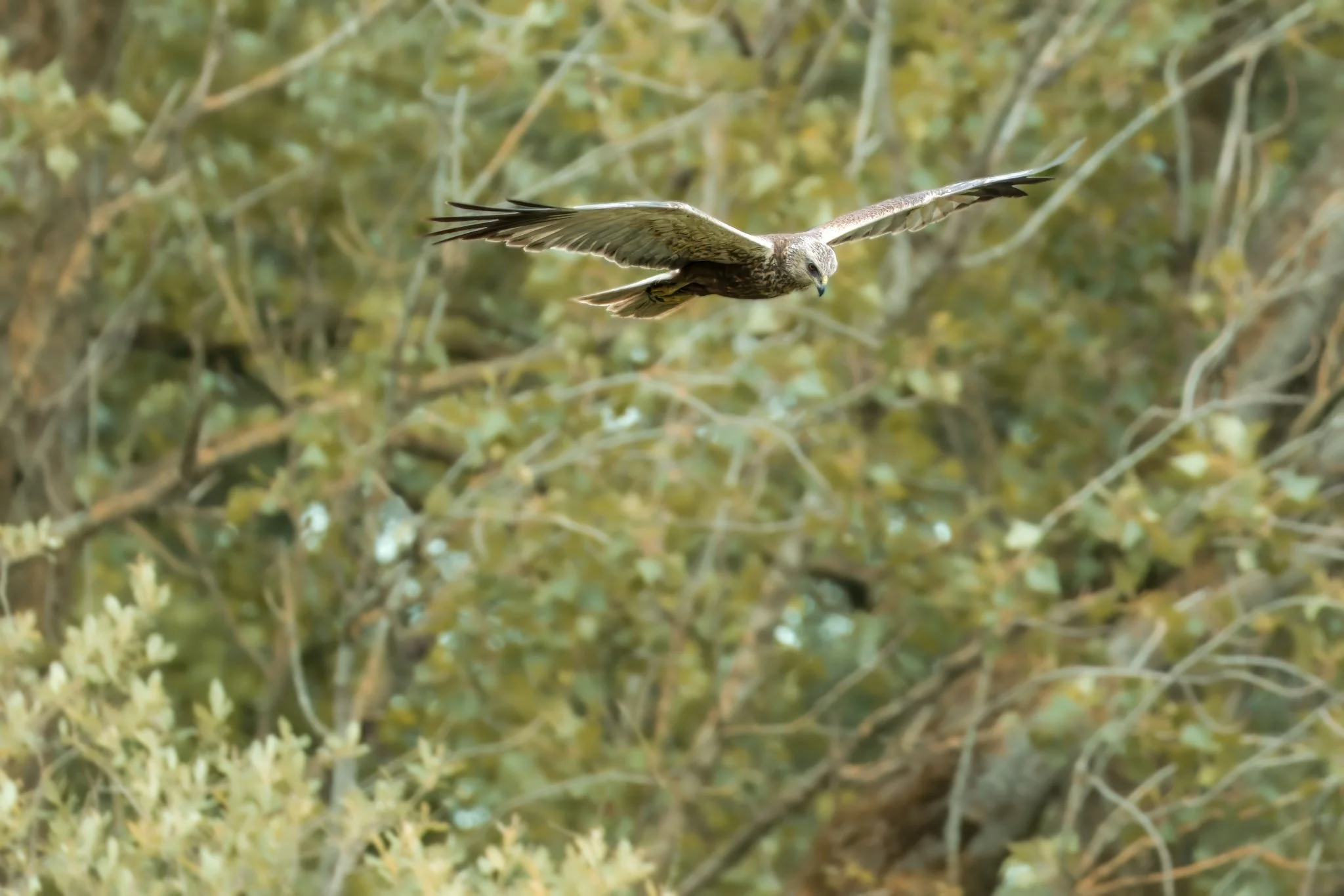
The lens isn’t perfect, of course. Isolating a fast-moving subject like this marsh harrier in low light proved too much; with an effective 55mm opening the background became messy and distracting even wide open. It would be unfair to expect full-frame, fast, variable-zoom performance from a lens not designed for that. By contrast, a 200–600mm with a full 95mm opening produces noticeably better subject isolation.
Who This Lens Is For / Limitations
This lens is ideal for APS-C users wanting serious reach without serious weight (travel, hiking, general wildlife). It does have limitations: relatively slow aperture, APS-C only design, no teleconverter support, and sharpness that is very good rather than class-leading at the long end, but who’s complaining. Pair it with your a6700 or a high resolution body in APS-C mode for an excellent APS-C zoom, that gets you comparable reach to the massive FE 200–600mm G OSS.
Bottom Line
The Sony 70–350mm G OSS is one of the most practically useful wildlife lenses in the E-mount system for APS-C shooters. It’s a unique offering, and I don’t quite know where to place it, it’s certainly more than your average APS-C zoom. I’d describe it as a “must-buy” for any wildlife shooter, no matter your camera body size. Its combination of reach, weight, autofocus, and price, coupled with good build quality, makes mobile, reach-oriented photography accessible; that practical advantage is its greatest strength.
This lens paired with the Sony a6700 is a fantastic combination and is also often sold as a companion lens. You can read more about the Sony a6700 in my review here.